Hematopoietic progenitor cells (hpcs) are an intermediate cell type in blood cell development. hpcs are immature cells that develop from hematopoietic stem cells, cells that can both self-renew and differentiate into hematopoietic progenitor cells. hpcs eventually differentiate into committed progenitor cells one of more than ten different types of mature blood cells. Progenitor cell. progenitors are typically the descendants of stem cells, only they are more constrained in their differentiation potential or capacity for self-renewal, and are often more limited in both senses. from: essentials of stem cell biology (third edition), 2014.
Mast Cellcommitted Progenitors Pnas

More committed progenitor cells images. The primary role of progenitor cells is to replace dead or damaged cells. in this way, progenitor cells are necessary for repair after injury and as part of ongoing tissue maintenance. progenitor cells also replenish blood cells and play a role in embryonic development. Jan 22, 2019 twenty-two weeks after transplantation, donor-derived hematopoietic stem/ progenitor cells [hscs, flk2− multipotent progenitor (mppflk2−), . See full list on technologynetworks. com.
Transformation From Committed Progenitor To Leukaemia Stem
Plasticity of the genome in committed progenitors has also been argued committed progenitor cells for on the however, the use of primary progenitor cell populations poses a number of .
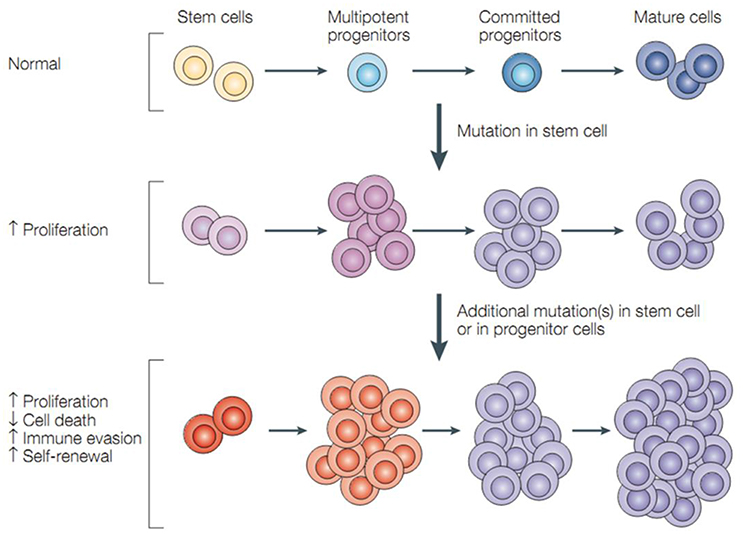
Progenitor Cell An Overview Sciencedirect Topics
Mar 10, 2016 · with advances in the ability to prospectively separate hscs and committed progenitors and the development of functional and molecular assays to assess the development potential of single cells in vitro and in vivo, a more complex picture of hsc commitment to the megakaryocytic lineage has emerged in which megakaryocytes may arise directly from hscs as well as from multi-, bi-, and unipotent progenitors. Jun 14, 2019 one differentiation pattern consists of progenitor cell populations committed progenitors (sl-mkps), a cell population that shares many . Stem cellsshare two qualifying characteristics. firstly, all stem cells have the potential to differentiate into multiple types of cells. secondly, stem cells are capable of unlimited self-replication via asymmetric cell division, a process known as self-renewal. there are two broad categories of stem cells found in all mammals. the first are embryonic stem cells. these cells arise from the inner cell mass of the blastocyst in an early-stage embryo. embryonic stem cells are the blueprint used to create every cell in the body. because they can be used to create any type of cell, they are known as pluripotent. the second type of stem cells found in mammals are adult stem cells (or somatic stem cells). unlike pluripotent embryonic stem cells, adult stem cells are more limited in relation to the type of cells that they become. unlike embryonic stem cells that could be used to create any cell, adult stem cells are limited to generating cell types within a specific lineage, such as blood In the absence of continued ngn-3 expression, the committed cells may develop toward an alpha cell fate. a recent study found that pancreatic progenitor cells and alpha cells adopted a beta cell fate after ectopic expression of pax-4, which in turn induced ngn-3 expression and alpha cell neogenesis from progenitor cells in the adult pancreas.

Hematopoietic Stem And Progenitor Cells Hspcs Isolation
Most physicians are aware that morphologically identifiable mast cells are not present in the peripheral blood circulation, but an appreciable portion of them believe that basophils may become mast cells after invading connective tissue. this discrepancy has arisen because the origin of mast cell-committed progenitors (mcps) was unknown until now. A progenitor cell is a biological cell that, like a stem cell, has a tendency to differentiate into a specific type of cell, but is already more specific than a stem cell and is pushed to differentiate into its "target" cell. the most important difference between stem cells and progenitor cells is that stem cells can replicate indefinitely.
5 thus, hematopoietic stem and progenitor cells (hspc) have an . In the absence of continued ngn-3 expression, the committed cells may develop toward an alpha cell fate. a recent study found that pancreatic progenitor cells and alpha cells adopted a beta cell fate after ectopic expression of pax-4, which in turn induced ngn-3 expression and alpha cell neogenesis from progenitor cells in the adult pancreas. in our experiments, blocking ngn-3 expression early during the first three days of culture inhibited endocrine differentiation. Oct 12, 2017 progenitor commitment with respect to erythropoiesis needs to be clarified by flow cytometry and detailed analyses of cfu-gemm assays as .
Hematopoietic Stemprogenitor Cell Commitment To The
Progenitor cell. progenitors are typically the descendants of stem cells, only they are more constrained in their differentiation potential or capacity for self-renewal, and are often more limited in both senses. from: essentials of stem cell biology (third edition), 2014. related terms: stem cells; neural stem cell; in vitro; in vivo; oligodendrocyte progenitor. Aug 09, 2005 · mcps are the committed progenitor of mast cells, whereas monocytes are the committed precursor of macrophages. therefore, the development of mcps and monocytes is likely to be different. monocytes come from granulocyte/macrophage progenitors (gmps) that are in turn progeny of the common myeloid progenitors (cmps). however, chen et al.
Essentially, progenitor cells have been described as stem cell descendants with the limited ability to self-renew, proliferate, and give rise to more specialized cells. Common myeloid progenitor cells are cells committed to the myeloid lineages, including the megakaryocyte-erythroid and granulocyte-monocyte lineages. The earlier progenitor cells are multipotent, but as division and differentiation proceed, later progenitors are formed that are committed to three, two, or one cell line . Progenitor cell progenitors are typically the descendants of stem cells, only they are more constrained in their differentiation potential or capacity for self-renewal, and are often more limited in both senses. from: essentials of stem cell biology (third edition), 2014.

Examples. satellite cells found in muscles. they play a major role in muscle cell differentiation and injury recoveries. intermediate progenitor cells formed in committed progenitor cells the subventricular zone. some of these transit amplifying neural progenitors migrate via rostral migratory radial glial cells found in. Here we show that leukaemia stem cells (lsc) can maintain the global identity of the progenitor from which they arose while activating a limited stem-cellor self-renewal-associated programme. we isolated lsc from leukaemias initiated in committed granulocyte macrophage progenitors through introduction of the mll-af9 fusion protein encoded by the t(9;11)(p22;q23). Dec 18, 2020 progenitor cells are descendants of stem cells that then further differentiate to create specialized cell types. there are many types of progenitor .
Neural progenitor cells (npcs) are being explored alongside neural stem cells for their potential to treat diseases of or injury to the central nervous system. a deeper understanding of how these cells function on a cellular and molecular basis is needed to progress from early experimental research to therapeutic use. npcs are currently utilized in researchconducted on cns disorders, development, cell regeneration and degeneration, neuronal excitability, and therapy screening. when compared to induced pluripotent stem cells, which are cells reprogrammed into a pluripotent state, npcs can cut down on time in some experiments. hematopoietic progenitor cells and stem cells are being researched fortheir capacity to treat blood cell disorders. they are also currently used to help treat patients with a variety of malignant and non-malignant diseases via bone marrow transplantsthat deliver bone marrow and peripheral blood progenitor cells to patients. these procedures can assist patients i Jun 11, 2010 · sox9 is a multipotent progenitor cell marker in the developing pancreas. it is expressed in a subset of pdx-1 positive epithelial cells that are both notch-responsive and mitotically active, possibly regulating cell proliferation and differentiation of both endocrine and exocrine tissues. These conditions support the proliferation and differentiation of individual progenitor cells, or cfus, resulting in the formation of discrete colonies. colonies derived from different types of progenitor cells are classified and counted based on the number and types of mature cells that they contain using morphological and phenotypic criteria. the cfu assay is most commonly used to detect multipotential and lineage-restricted progenitors of the erythroid, granulocytic and macrophage lineages.


0 comments:
Post a Comment